
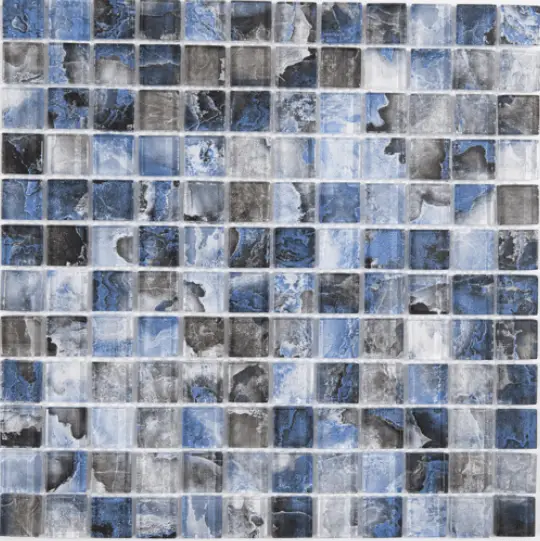
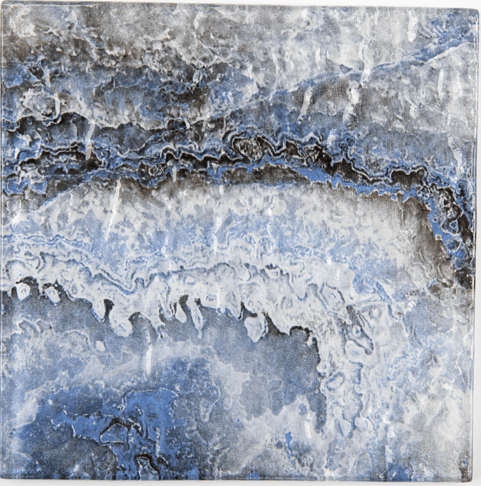
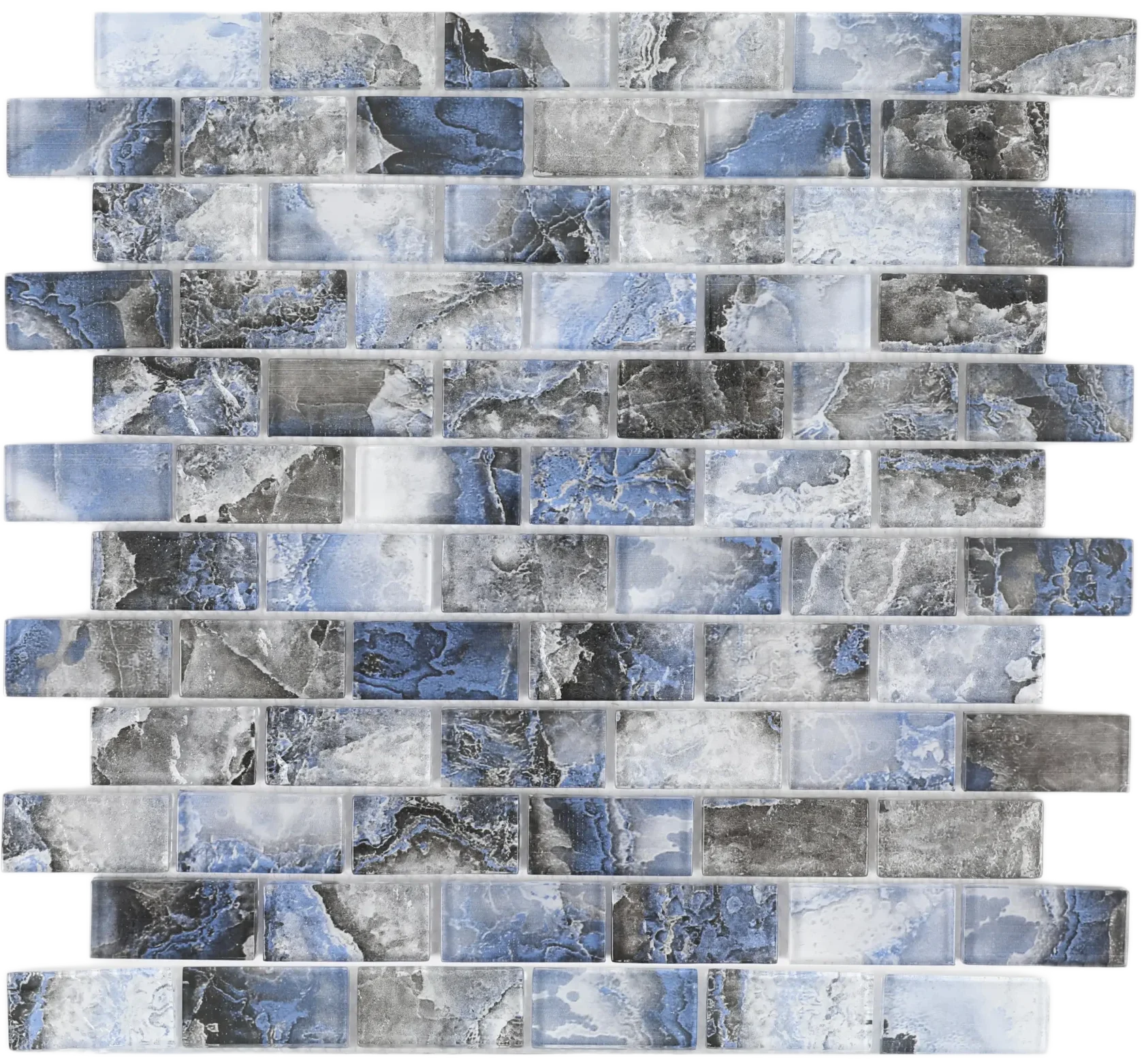
Alaska Glass Mosaic combines cool blue, silver, gray, and reflective crystal tones to create an elegant surface for swimming pools, kitchens, bathrooms, showers, and contemporary interiors.
Its layered appearance interacts beautifully with water and natural light. The result is a sophisticated mosaic surface suitable for modern residential, hospitality, and luxury pool projects.

Explore Alaska Glass Mosaic
Alaska Glass Mosaic for Luxury Pool and Architectural Design
Alaska Glass Mosaic brings together cool blue, silver, gray, and reflective tones in a distinctive crystal glass surface. The combination creates visual movement without relying on a single uniform shade. Instead, individual mosaic pieces interact with surrounding light and produce subtle changes throughout the day.
This character makes the collection particularly attractive for swimming pools. Water adds another reflective layer and can intensify the blue and silver tones. However, the material is not limited to pools. Designers can also consider it for kitchens, bathrooms, showers, and decorative architectural surfaces.
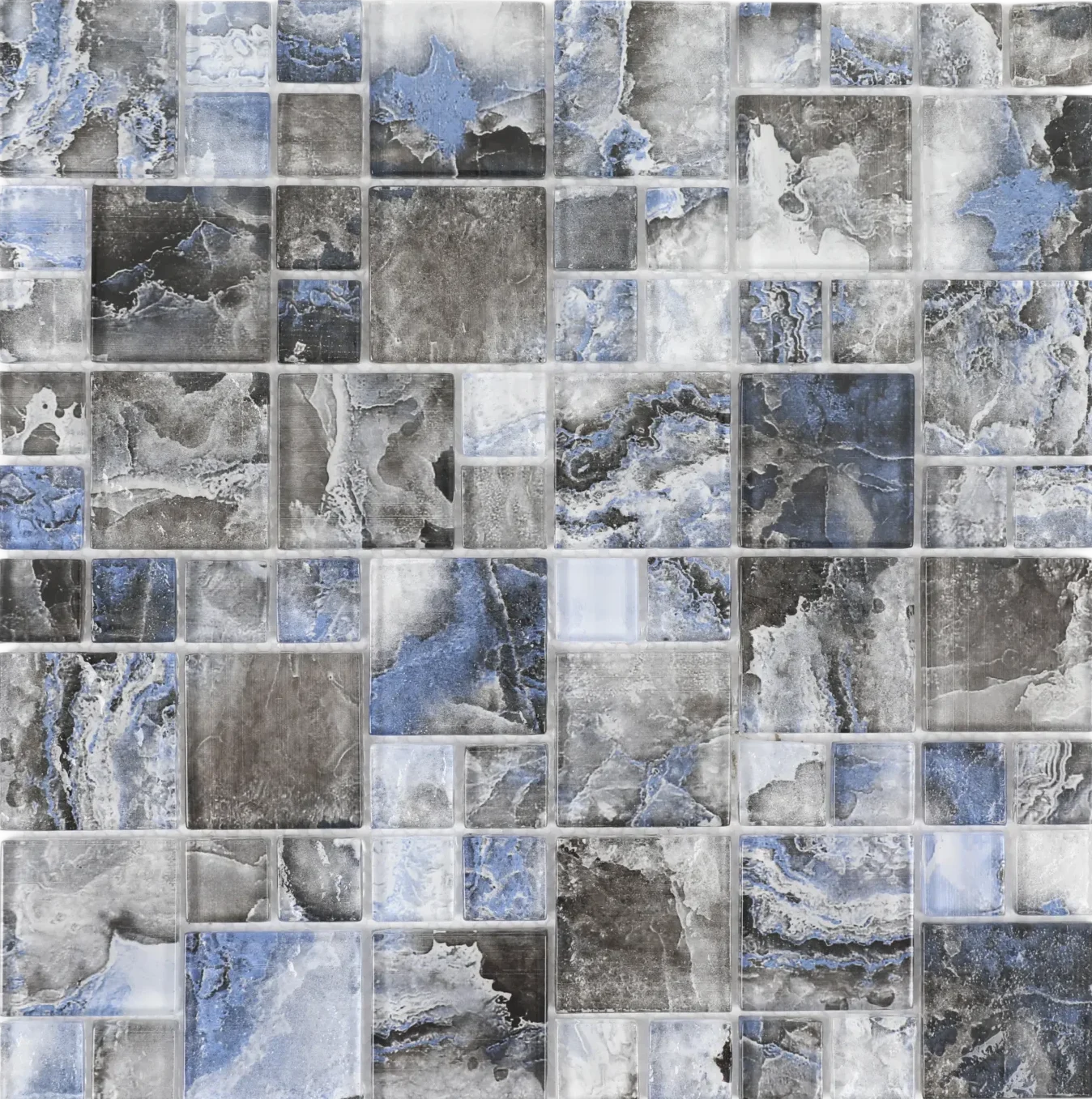
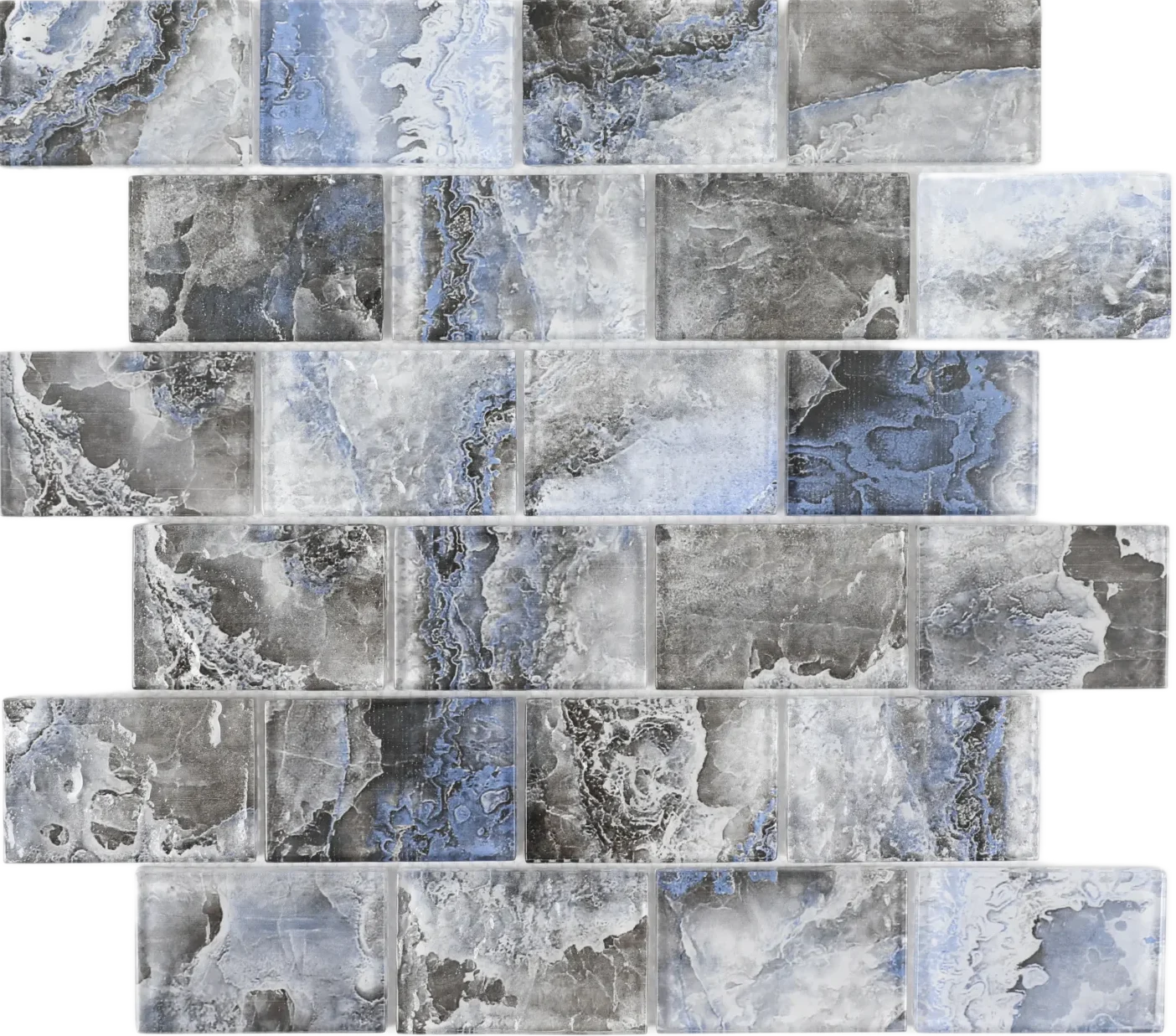
Available mosaic formats include 1×1, 1×2, 2×3, 6×6, and mixed configurations. Therefore, designers can select a scale that complements the dimensions and visual character of each project.
Alaska Glass Mosaic Tile for Contemporary Spaces
An Alaska glass mosaic tile installation can introduce texture and visual depth into spaces dominated by smooth architectural materials. Glass, natural stone, metal, and clean painted surfaces can all coordinate with its cool palette.
Because the mosaic contains several related tones, the finished surface does not appear completely uniform. Instead, small differences between individual pieces create a layered composition. This effect becomes especially noticeable when natural or architectural light reaches the glass from different angles.
For contemporary projects, designers can use the mosaic as a feature rather than covering every surrounding surface. Neutral materials can provide balance while allowing the glass to become the primary decorative element.
Blue Glass Mosaic Pool Tile with Reflective Character
A blue glass mosaic pool tile can dramatically influence the appearance of a swimming pool. Blue surfaces interact naturally with water, while reflective glass can add brightness and dimensional movement.
The Alaska palette introduces more complexity through silver, gray, and deeper blue elements. As a result, the pool interior can develop a layered appearance instead of displaying one flat blue tone.
Natural daylight also changes the visual effect. Direct sun can emphasize brighter reflective pieces, while shaded areas may reveal deeper blue and gray tones. Therefore, the same installation can appear different throughout the day.
Luxury Glass Pool Tile for Refined Outdoor Design
A luxury glass pool tile should contribute more than color. Texture, reflection, scale, surrounding materials, and water movement all influence the final appearance.
Alaska’s cool palette can work particularly well with white architecture, gray surfaces, natural stone, and darker accents. These combinations create a refined environment without requiring excessive decorative elements.
Designers can also coordinate the pool finish with coping and decking materials. Light natural stone can produce a bright resort-style environment, while darker materials can create stronger contrast around the water.
Swimming Pool Glass Mosaic for Water-Focused Architecture
A swimming pool glass mosaic interacts continuously with water and light. This relationship can create visual movement even when the surrounding architecture remains minimal.
Smaller mosaic pieces also allow the surface to follow architectural transitions more naturally than many larger materials. This can be useful around selected pool details and decorative areas.
The final effect depends on several design decisions. Mosaic format, grout selection, surrounding stone, lighting, and water depth can all influence how the colors appear after installation.
Blue Mosaic Pool Tile for Cool-Toned Designs
A blue mosaic pool tile can establish the main color direction of an outdoor environment. Cool blue tones naturally complement water, while gray and silver elements can connect the pool with surrounding architectural materials.
This combination works well in contemporary landscapes where designers want the pool to feel integrated with the architecture. White façades can brighten the composition, while charcoal or black accents can create definition.
Natural landscaping provides another contrast. Green vegetation beside blue and silver glass can soften modern architecture and create a more balanced outdoor environment.
Glass Mosaic Tile for Pools and Water Features
A glass mosaic tile for pools can create both decorative detail and broad visual continuity. Designers may use mosaic across substantial areas or reserve it for selected architectural features.
Water features can also benefit from reflective glass. Moving water changes how light reaches the surface, producing an effect that differs from a dry installation.
For this reason, designers should evaluate samples under lighting conditions similar to the actual project whenever possible. Wet and dry samples may also appear different.
Modern Pool Mosaic Tile for Contemporary Architecture
A modern pool mosaic tile often works best when its color palette relates directly to the architecture around it. Alaska’s mixture of blue, gray, and silver can complement contemporary materials without creating an overly decorative appearance.
Large glass openings, white stucco, gray natural stone, concrete-inspired finishes, and dark metal details can all coordinate with this palette. Meanwhile, landscaping introduces organic contrast.
Keeping the surrounding material selection controlled can make the mosaic more visually effective. Rather than combining many competing colors, designers can allow water and glass to provide the primary visual movement.
Glass Tile for Swimming Pools and Luxury Landscapes
A glass tile for swimming pools offers a different visual character from many traditional pool finishes. Glass can reflect and transmit light, which creates additional depth beneath moving water.
The Alaska collection uses this characteristic together with its cool-toned palette. Silver and pale pieces can catch stronger highlights, while darker blue sections provide visual depth.
Outdoor lighting can further transform the installation after sunset. Carefully positioned pool lighting may reveal colors and reflections that appear more subtle during daylight.
Luxury Pool Tile for Resort-Inspired Outdoor Spaces
A luxury pool tile can help establish the visual identity of an entire outdoor environment. In many high-end projects, the pool becomes an architectural focal point rather than a separate functional feature.
Glass mosaic can support this approach because the material changes visually with water, daylight, and artificial lighting. Consequently, the pool remains dynamic throughout different times of day.
Surrounding materials should support this effect. Natural stone coping, restrained landscaping, and clean architectural lines can create a sophisticated setting around the mosaic surface.
Blue and Silver Glass Mosaic for Sophisticated Color Palettes
A blue and silver glass mosaic provides more tonal complexity than a conventional single-color blue finish. Silver introduces reflective highlights, while gray tones help moderate the overall palette.
These colors can coordinate particularly well with contemporary architecture. Stainless steel, charcoal details, white walls, and gray stone can repeat tones already present within the mosaic.
At the same time, blue maintains a clear relationship with water. Therefore, the finished design can feel coordinated without becoming overly monochromatic.
Glass Mosaic Design for Bathrooms and Showers
Glass mosaic can also create distinctive bathroom and shower surfaces. In these environments, artificial lighting becomes particularly important because it can highlight reflective details within individual mosaic pieces.
Designers can use the material as a feature wall, selected decorative surface, or part of a broader material composition. Neutral stone or porcelain can provide balance around the more detailed mosaic.
The cool color palette can create a clean and sophisticated atmosphere. Meanwhile, warmer cabinetry or metal finishes can introduce contrast where desired.
Glass Mosaic Tile for Kitchen Features
Kitchen applications offer another way to introduce reflective glass into an interior. Mosaic can provide texture between smooth cabinetry, countertops, and architectural surfaces.
Blue, silver, and gray tones can work particularly well in kitchens using white, gray, black, or natural wood finishes. The surrounding materials determine whether the final appearance feels cool and minimal or warmer and more transitional.
Lighting under cabinetry can also emphasize the dimensional qualities of glass and make the surface more visually prominent during evening hours.
Crystal Glass Mosaic and Natural Light
Crystal glass has a visual relationship with light that differs from opaque materials. Reflection and transparency can create subtle variations depending on viewing angle and surrounding illumination.
This characteristic becomes especially valuable near swimming pools and large windows. Sunlight can move across the surface during the day and continuously change which pieces appear brightest.
As a result, glass mosaic can add visual activity without requiring a complicated decorative pattern.
Choosing the Right Mosaic Format
Alaska is available in several mosaic configurations, including 1×1, 1×2, 2×3, 6×6, and mixed formats. Each option creates a different visual rhythm.
Smaller pieces can create a detailed texture across the surface. Larger formats may appear cleaner and allow individual glass pieces to become more noticeable.
Mixed configurations can create additional movement by varying the scale across the installation. Designers should consider viewing distance and overall project dimensions when selecting a format.
Coordinating Glass Mosaic with Natural Stone
Natural stone can provide an effective visual counterpoint to reflective glass. Stone introduces organic variation and a more grounded surface, while mosaic contributes brightness and color.
Light marble or limestone can create a clean resort-inspired palette around blue glass. Beige and cream materials introduce warmth, while gray stone reinforces the cooler tones within Alaska.
Explore the natural stone paver collection to compare materials that can complement glass mosaic in outdoor environments.
Alaska Glass Mosaic Miami Pool Design
Alaska Glass Mosaic Miami projects can take advantage of strong natural sunlight and architecture designed around outdoor living. Reflective blue and silver surfaces can become particularly vibrant under South Florida daylight.
Miami properties often combine pools with white façades, glass openings, tropical landscaping, and natural stone. The Alaska palette can connect these elements through cool color and reflective texture.
In luxury residential environments, the mosaic can also support a resort-inspired design language. Clean decking and restrained landscaping allow the water surface to remain the main visual focus.
Alaska Glass Mosaic Florida Outdoor Projects
Alaska Glass Mosaic Florida applications can include residential pools, hospitality environments, water features, bathrooms, and other architectural surfaces. Florida’s bright climate can emphasize the reflective qualities of crystal glass.
Blue tones naturally relate to swimming pools and coastal-inspired architecture. Meanwhile, silver and gray elements can coordinate with modern building materials and neutral outdoor surfaces.
Material selection should always consider the complete environment. Coping, decking, landscaping, lighting, and surrounding architecture influence how the mosaic appears within the finished project.
Alaska Glass Mosaic Houston Architecture
Alaska Glass Mosaic Houston projects can use cool glass tones to create contrast against warm exterior materials and landscaped environments. The mosaic can support contemporary pools as well as selected interior applications.
Modern Houston residences often combine several architectural materials. Glass, stone, wood, metal, and neutral wall finishes can all interact effectively with the blue and silver palette.
For pool environments, designers can coordinate the mosaic with light natural stone to create a brighter composition. Darker coping can instead establish stronger definition around the water.
Alaska Glass Mosaic Texas Pool Projects
Alaska Glass Mosaic Texas installations can bring a cool visual element into outdoor environments dominated by warm sunlight and natural landscaping. This contrast can make swimming pools more visually prominent.
Contemporary Texas properties often feature expansive outdoor living areas. A carefully selected pool surface can connect these spaces with the architecture while still establishing a distinct focal point.
The combination of reflective glass and moving water can also create changing visual effects from morning through evening.
Alaska Glass Mosaic Dallas Luxury Design
Alaska Glass Mosaic Dallas projects can incorporate reflective blue and silver surfaces into luxury residential pools, modern outdoor living areas, bathrooms, and decorative architectural features.
Dallas architecture ranges from contemporary residences to transitional luxury properties. Because the mosaic uses several related neutral and blue tones, it can adapt to different surrounding material palettes.
White stone can produce a brighter composition, while gray materials create a more tonal contemporary appearance. Dark accents can add stronger architectural contrast.
Designing with Water, Glass, and Light
Water, glass, and light work together to create a constantly changing visual surface. Water movement distorts reflections, while glass responds to changes in illumination.
This interaction explains why mosaic samples should be considered within the context of the complete project. A sample viewed indoors may look different once installed beneath water and exposed to natural sunlight.
Designers should also consider nighttime conditions. Pool lighting can introduce an entirely different appearance after sunset and highlight deeper areas of the installation.
Alaska Glass Mosaic for Modern Swimming Pools
Alaska Glass Mosaic can provide modern swimming pools with visual depth while maintaining a controlled color palette. Blue, gray, and silver pieces create variation without relying on highly contrasting colors.
Clean architectural surroundings can reinforce this effect. Simple coping lines, neutral decking, and restrained landscaping allow the reflective pool surface to become more prominent.
Creating a Balanced Luxury Pool Environment
Successful pool design depends on the relationship between several materials rather than one surface alone. Mosaic, coping, decking, architecture, landscaping, furniture, and lighting should work together.
A limited material palette often creates a more sophisticated result. Designers can repeat selected blue, gray, silver, or neutral tones throughout the project to establish visual continuity.
Natural Variation in Glass Mosaic Surfaces
Individual mosaic pieces can display variations in color, reflection, texture, and visual depth. These differences contribute to the overall character of the installed surface.
Lighting conditions may also make certain pieces appear brighter or darker. Therefore, the complete installation should be viewed as a composition rather than as a collection of perfectly identical pieces.
Sample review can help designers understand the general palette before making final selections for a project.
Explore Glass Mosaic Collections at Stonelinegroup
Choosing a mosaic involves more than selecting a color. Format, surrounding materials, lighting, application area, and overall architectural style should all be considered.
Stonelinegroup offers glass mosaic options for swimming pools and architectural applications in a range of colors, patterns, and visual styles.
Explore the glass mosaic collection to compare additional options for residential and commercial projects.
For additional information about tile materials, installation considerations, and industry standards, visit the Tile Council of North America.
Conclusion: Alaska Glass Mosaic
Alaska Glass Mosaic combines blue, silver, gray, and reflective crystal glass tones in a versatile architectural surface. Its color variation can create visual depth in swimming pools while also supporting selected kitchen, bathroom, shower, and decorative applications.
The collection can coordinate with natural stone, white architecture, dark accents, metal, glass, and landscaped environments. Different mosaic formats also provide flexibility for projects with varying scales and design objectives.
From Miami and Florida to Houston, Texas, and Dallas, Alaska offers designers a sophisticated glass mosaic option for projects centered on water, light, contemporary architecture, and refined outdoor living.