
Ultimate Guide: Unlocking the Power of Portland White Cement for Modern Construction
Stoneline Group is proud to expand its legacy of excellence into the world of construction materials, beginning with a premium offering: Portland White Cement. Known for its remarkable blend of strength, durability, and visual purity, this high-performance material is the top choice for designers, architects, and builders aiming to create long-lasting and visually stunning structures. As the construction industry evolves, the demand for materials that combine functionality with elegance is increasing. Portland White Cement delivers both.
Whether you’re working on intricate moldings, ornate facades, polished interior finishes, or large-scale urban infrastructure, Portland White Cement opens the door to limitless creative and functional possibilities. Its bright, reflective appearance enhances both the aesthetics and performance of any surface. From luxury villas to municipal landmarks, Portland White Cement serves as the foundation for ambitious, high-end designs.
What Sets White Portland Cement Apart?
White Portland Cement is chemically similar to standard gray cement, with one striking difference — its pure white color. This visual clarity is achieved through reduced levels of iron and manganese, elements that are typically responsible for the gray hue of traditional cement. The result is a bright, neutral base that offers more flexibility in color blending, finishing, and decorative expression.
More than just a surface-level difference, this color purity plays a vital role in modern design. Portland White Cement allows for a wide range of applications where aesthetics matter just as much as structural integrity. Whether it’s a contemporary plaza, an artistic concrete sculpture, or a high-end resort, Portland White Cement supports design excellence.
Key Benefits Include:
Design Flexibility: Ideal for colored or decorative concrete projects, thanks to Portland White Cement’s ability to absorb and display pigments evenly.
Enhanced Reflectivity: Helps brighten interior spaces and reduce heat absorption in exteriors, which is especially valuable in warm climates.
Structural Strength: Matches the load-bearing performance of gray cement, making Portland White Cement viable for both decorative and structural purposes.
Color Consistency: Provides a neutral, consistent base for pigmented mixes, ensuring uniformity across large or detailed surfaces.
Ideal Applications
Decorative & Architectural Projects:
From sculpted garden features to sleek modern facades, Portland White Cement delivers both beauty and resilience. Its pigment-friendly surface allows for vivid color matching and consistency in artistic concrete designs. Whether you’re an architect, landscape designer, or artist, it gives you the control you need to bring your vision to life.
Interior & Exterior Finishes:
Stucco, plasters, and tile grout made with Portland White Cement offer a refined, polished look that lasts. It’s commonly used in luxury homes, public monuments, and premium commercial buildings, especially in areas where every detail must reflect quality and style.
Sustainable Urban Design:
Thanks to its light color, Portland White Cement reflects solar heat more effectively than darker surfaces. This contributes to cooler pavements, walkways, and walls, supporting eco-friendly infrastructure and reducing the urban heat island effect. It’s a natural fit for green-certified projects and cities looking to implement energy-saving solutions.
Why Choose Stoneline Group?
At Stoneline Group, we prioritize not just delivering top-quality Portland White Cement, but also offering a reliable, customer-focused experience. Our facilities are designed for efficient distribution, whether you need bulk orders for large-scale construction or smaller bagged materials for local retail. We understand the critical role timely delivery and consistent product quality play in project success.
Backed by years of experience in the building sector, we know what construction professionals need — consistency, availability, technical support, and material reliability. Our white cement solutions are tested and trusted for long-term performance.
Looking Ahead
With increasing demand for sustainable and aesthetically pleasing materials, Portland White Cement is set to become a staple in modern architecture. As eco-consciousness and visual refinement gain importance across industries, materials like this are key to forward-thinking design.
Partnership Spotlight: Cimpor + Stoneline Group
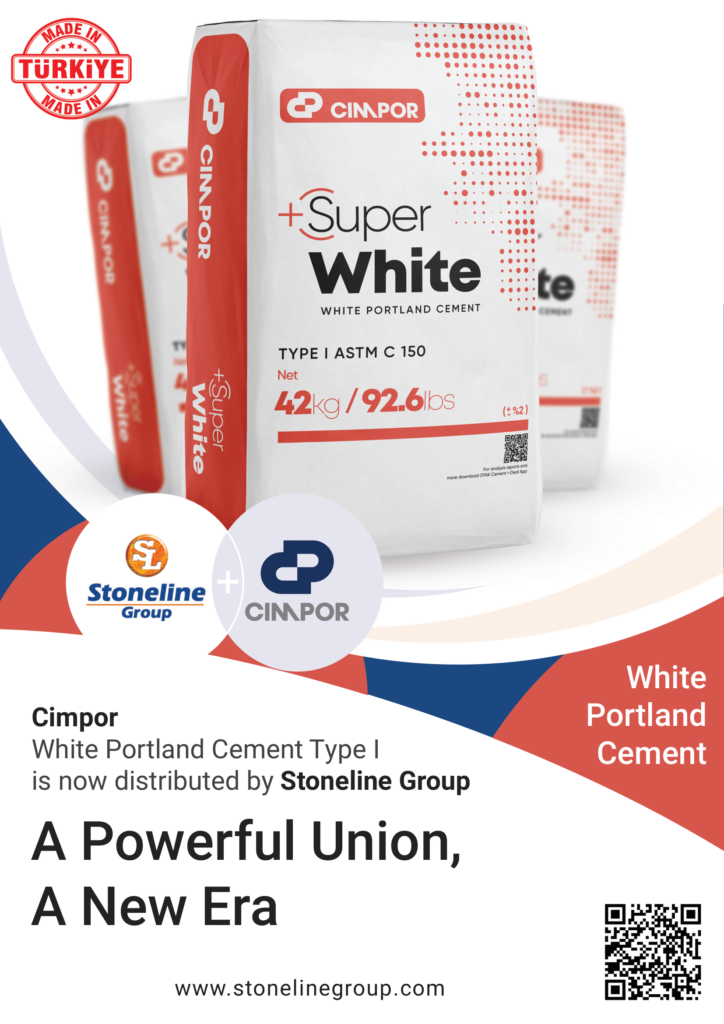
In an exciting new partnership, Stoneline Group has become the official distributor of Cimpor’s Super White Portland Cement Type I in the U.S. market. Manufactured in Turkey and known for its exceptional brightness, fine texture, and durability, this product brings together European production excellence with American distribution strength.
This partnership ensures that contractors, retailers, and architects across the U.S. have access to some of the highest-quality Portland White Cement available on the market today.
To learn more about Cimpor, visit: www.cimpor.com
Explore our cement range at: www.stonelinegroup.com
5 Essential Benefits of Portland White Cement in Construction
Portland White Cement is a specialized type of cement that offers both strength and a brilliant white finish, making it ideal for architectural projects and decorative applications. Its fine texture and high-quality composition allow builders and designers to achieve durable, aesthetically pleasing results in residential, commercial, and industrial construction. In this article, we’ll highlight five essential benefits of using Portland White Cement.
1. Superior Aesthetic Appeal
The standout feature of Portland White Cement is its pure white color. This makes it the go-to choice for exposed concrete finishes, precast elements, terrazzo flooring, and decorative facades. When combined with colored aggregates or pigments, it produces stunning architectural effects that ordinary grey cement cannot replicate.
2. High Strength and Durability
Portland White Cement is produced using raw materials with low iron and manganese content, resulting in both a lighter appearance and strong binding properties. Its high compressive strength ensures long-term durability, making it suitable for load-bearing structures as well as decorative applications.
3. Versatility Across Applications
This cement is used in a wide range of applications, including wall finishes, flooring, precast products, ornamental structures, and tile grouts. Its ability to blend with pigments and aggregates makes it a versatile material for architects who want both function and beauty in their designs. Explore Stoneline Group’s construction material resources for inspiration on pairing stone with Portland White Cement in design projects.
4. Consistency in Finish
Unlike grey cement, which can produce uneven coloration, Portland White Cement ensures consistent results. This makes it especially valuable in projects where uniform aesthetics are crucial, such as luxury hotels, high-end residences, and cultural landmarks.
5. Environmentally Friendly Production
Modern Portland White Cement is often manufactured using cleaner processes and high-quality raw materials. As a result, it supports sustainable construction practices while providing long-lasting performance. For complementary eco-friendly natural stone materials, DN Mermer supplies premium marble, travertine, and limestone from Turkey.
Conclusion
Portland White Cement is more than just a construction material—it is a key element for projects that demand strength, durability, and visual appeal. Its superior finish, versatility, and sustainability make it a preferred choice for both functional and decorative applications. Combined with high-quality natural stone from Stoneline Group and DN Mermer, it ensures architectural projects that endure with elegance.
5 Essential Benefits of Portland White Cement for Architectural Design
Portland White Cement stands out as a high-quality material known for its brightness, strength, and versatility in both structural and decorative applications. Unlike traditional grey cement, it offers a clean, refined finish that enhances the visual appeal of modern architectural projects. Whether used in flooring, precast elements, or artistic finishes, Portland White Cement has become a preferred choice for designers and builders worldwide. In this article, we’ll uncover five essential benefits of this remarkable material.
1. Superior Aesthetic Quality
What makes Portland White Cement so appealing is its pure white color and smooth consistency. Architects often choose it for high-end projects that require a flawless, uniform appearance. Its whiteness enhances the brilliance of pigments, allowing for bold or subtle color variations in decorative concrete, terrazzo floors, or exterior façades. For inspiration, explore Stoneline Group’s natural stone and tile collections that pair beautifully with white cement finishes.
2. High Strength and Performance
Portland White Cement is not just beautiful — it’s also strong. Manufactured with low iron and manganese content, it maintains excellent compressive strength comparable to or exceeding that of standard grey cement. This makes it ideal for structural and decorative applications alike, from sculptural forms to durable architectural panels.
3. Versatile Design Applications
Because of its fine texture and superior whiteness, Portland White Cement is widely used in a variety of applications, including precast panels, tiles, decorative blocks, countertops, and flooring. It’s also an excellent base for colored concretes and polished surfaces. Combined with marble aggregates, it creates stunning terrazzo effects for luxurious interiors. Check out Stoneline Group’s porcelain and marble tile options for matching materials.
4. Reflectivity and Energy Efficiency
The light color of Portland White Cement contributes to higher reflectivity, reducing heat absorption in outdoor surfaces such as pavements and façades. This helps improve energy efficiency in buildings by keeping surfaces cooler, particularly in sunny climates like Florida or the Mediterranean region.
5. Sustainable and Authentic Material
Modern Portland White Cement production follows strict environmental standards. It’s made with high-purity raw materials and advanced manufacturing technologies that reduce carbon footprint and waste. For sustainable complementary materials, DN Mermer supplies eco-friendly marble, travertine, and limestone from Turkey, ensuring long-lasting, natural design harmony.
Why Use It with Natural Stone?
When used alongside natural stone elements such as marble or travertine, Portland White Cement creates seamless transitions and elegant contrasts. Its brightness enhances the natural tones of stone, producing visually cohesive and durable results. Builders and designers often pair it with light-colored stones for outdoor stairs, facades, and artistic features to achieve a balanced, timeless aesthetic.
Conclusion
Portland White Cement embodies the union of strength and beauty. Its versatility, reflectivity, and sustainability make it the go-to material for architects and builders seeking elegant, high-performance surfaces. Combined with fine natural stone from Stoneline Group and authentic materials from DN Mermer, it forms the foundation of modern architecture that’s as durable as it is refined.
Portland White Cement: A Clean Foundation for Modern Architectural Design
Portland white cement is a premium construction material widely used in architectural and decorative applications where brightness, consistency, and refined aesthetics are required. Unlike traditional grey cement, white Portland cement offers a clean, light base that enhances color accuracy and surface clarity. This makes it an essential material in modern architecture, landscape design, precast elements, and luxury outdoor projects.
As contemporary design trends continue to favor light tones, minimalism, and material purity, portland white cement has become a critical component in projects that demand both structural performance and visual sophistication.
What Is Portland White Cement?
Portland white cement is produced using raw materials with very low iron and manganese content, which allows the cement to retain its bright white color after processing. While its chemical and mechanical properties are similar to grey Portland cement, its visual characteristics set it apart.
This unique composition makes white cement ideal for applications where appearance is as important as strength, such as architectural concrete, decorative finishes, terrazzo, and high-end exterior elements.
Why Portland White Cement Is Preferred in Modern Design
The primary advantage of portland white cement is its ability to serve as a neutral, luminous base. It allows pigments, aggregates, and surface textures to appear more vibrant and true to color. Designers often choose white cement when working with exposed concrete surfaces that are meant to be seen rather than concealed.
In outdoor environments, white cement surfaces reflect more light, contributing to brighter, more open spaces. This aligns well with contemporary design philosophies that emphasize clarity, openness, and visual balance.
Architectural Applications of Portland White Cement
Portland white cement is widely used in architectural concrete elements such as facades, wall panels, stairs, benches, and paving units. Its clean appearance supports modern geometries and sharp lines, making it a popular choice in minimalist and modernist architecture.
When used in combination with water features or pools, white cement-based elements provide a crisp contrast to water finishes. Designers often coordinate these surfaces with refined glass mosaic pool interiors such as
Super White Glass Mosaic or
Curacao Glass Mosaic to create cohesive, high-end outdoor environments.
Portland White Cement in Landscape and Outdoor Design
In landscape architecture, portland white cement is frequently used for custom paving, retaining elements, planters, and architectural details. Its bright tone complements greenery, natural stone, and water features, helping outdoor spaces feel organized and visually balanced.
White cement-based surfaces are particularly effective in poolside environments, where they enhance the perception of cleanliness and luxury. When paired with blue-toned pool interiors such as
Blue Lagoon Glass Mosaic or
Sapphire Glass Mosaic, the result is a crisp, resort-inspired aesthetic.
Design Flexibility and Color Control
One of the key benefits of portland white cement is its compatibility with pigments and decorative aggregates. Because the base cement is white, designers have greater control over final color outcomes. This is essential in projects where precise color matching is required.
From subtle neutral tones to bold architectural colors, white cement allows designers to achieve consistent, repeatable results across large installations.
Durability and Performance Characteristics
Despite its refined appearance, portland white cement delivers strong mechanical performance. It offers comparable compressive strength, durability, and longevity to traditional grey cement when produced and applied correctly.
In exterior applications, proper mix design, curing, and surface protection are essential to ensure long-term performance. When these standards are met, white cement-based elements resist weathering, moisture, and environmental stress effectively.
Portland White Cement in Luxury Residential Projects
Luxury residential design often relies on portland white cement to create custom architectural elements that feel bespoke and refined. Pool decks, outdoor kitchens, seating elements, and feature walls made with white cement contribute to a cohesive, high-end design language.
When integrated with premium natural stone and glass mosaic finishes such as
Bahamas Glass Mosaic, white cement elements help unify materials across the outdoor environment.
Material Quality and Trusted Sourcing
The quality of portland white cement is directly influenced by raw material selection and production standards. High-end architectural and landscape projects often coordinate cement-based elements with premium natural stone sourced from trusted producers such as DN Mermer. Reliable sourcing ensures consistency across concrete and stone components within a project.
Maintenance and Long-Term Appearance
White cement surfaces require proper maintenance to preserve their appearance. Regular cleaning and appropriate sealing help protect against staining and discoloration. When maintained correctly, portland white cement retains its brightness and architectural clarity for many years.
This long-term visual stability makes it a valuable investment for projects that prioritize durability alongside design.
Conclusion
Portland white cement provides a clean, versatile, and durable foundation for modern architectural and outdoor design. Its ability to enhance color, reflect light, and support refined detailing makes it an essential material in luxury residential, commercial, and landscape projects. When paired with high-quality natural stone and glass mosaic finishes and sourced through reliable partners, white Portland cement delivers timeless performance and visual excellence.
7 Reasons Portland White Cement Is Essential for Premium Construction
Portland white cement is a specialized construction material widely used in architectural and decorative applications where brightness, clean finishes, and aesthetic consistency are required. Unlike traditional grey cement, Portland white cement is manufactured using raw materials with very low iron content, resulting in its distinct white color. This makes it ideal for projects where surface appearance matters just as much as structural performance.
From luxury pool decks and architectural concrete elements to tile adhesives and decorative mortar blends, Portland white cement plays a critical role in modern construction and design. Its versatility and visual clarity make it a preferred option in high-end residential, commercial, and hospitality developments.
What Is Portland White Cement?
Portland white cement is produced similarly to ordinary Portland cement but with stricter control over raw materials to maintain its bright white tone. The absence of significant iron and manganese content allows the cement to maintain a clean, light appearance after curing.
Because of its color purity, it is often used in exposed architectural concrete, decorative finishes, terrazzo production, tile grouting, and stone installations where discoloration would be unacceptable.
Portland White Cement in Decorative Concrete
One of the most common uses of Portland white cement is in decorative concrete applications. When mixed with white aggregates or light-colored sand, it produces bright concrete surfaces that feel modern and refined. Designers often use it in outdoor patios, pool decks, and minimalist architectural environments where grey tones would appear too industrial.
In luxury pool projects, white cement-based concrete elements are frequently paired with premium glass mosaic interiors such as Super White Glass Mosaic or Sapphire Glass Mosaic. The bright cement tones help enhance water clarity and reflect natural light more effectively.
Portland White Cement for Tile and Stone Installation
Portland white cement is commonly used in tile adhesives, grouts, and stone mortars, especially when installing light-colored natural stones or mosaics. Using white cement prevents staining or shadowing that can occur when darker mortars bleed through lighter materials.
In installations involving natural stone and mosaic combinations, white cement-based adhesives help maintain the true color of materials, particularly in luxury spa, bathroom, and pool environments.
Architectural and Facade Applications
Modern architecture frequently incorporates exposed concrete and light facade treatments. Portland white cement enables clean, contemporary finishes that align with minimalist and high-end design goals. It can be pigmented to create custom colors while still maintaining brightness and clarity.
Durability and Performance
Structurally, Portland white cement offers similar performance characteristics to standard Portland cement when mixed correctly. It provides strong compressive strength and reliable durability in properly engineered applications. However, mix design, curing conditions, and environmental exposure must always be considered for long-term performance.
Compatibility With Luxury Pool Environments
In pool construction, white cement-based materials are often used for coping bedding, deck substrates, and decorative finishes. Their brightness enhances surrounding materials and works seamlessly with reflective water surfaces. Pairing white cement structures with vibrant glass mosaics such as Blue Lagoon Glass Mosaic creates a visually cohesive and high-end pool environment.
Material Quality and Trusted Supply
Because visual consistency is critical in architectural projects, sourcing quality raw materials is essential. Many premium stone and construction supply chains collaborate with established producers such as DN Mermer to ensure that related natural stone components align with high aesthetic and production standards.
Maintenance and Considerations
Surfaces made with Portland white cement may require appropriate sealing or protective treatments depending on exposure conditions. Regular maintenance and proper cleaning methods help preserve brightness and prevent staining over time.
Conclusion
Portland white cement is more than a structural binder—it is a design-enabling material that supports bright, modern, and luxury construction goals. Whether used in decorative concrete, stone installation, or pool environments, its clean appearance and dependable performance make it a foundational component of premium architectural projects.